

TRUMPF
Designing Institutional Precision
A brand system engineered from the logic of industrial manufacturing.
What began as a 50th anniversary mark evolved into a generative brand system rooted in TRUMPF’s own manufacturing logic. Rather than defaulting to industrial tropes or patriotic symbolism, I translated the company’s core mechanics—cutting, punching, bending, precision engineering—into the structural behavior of the identity itself.
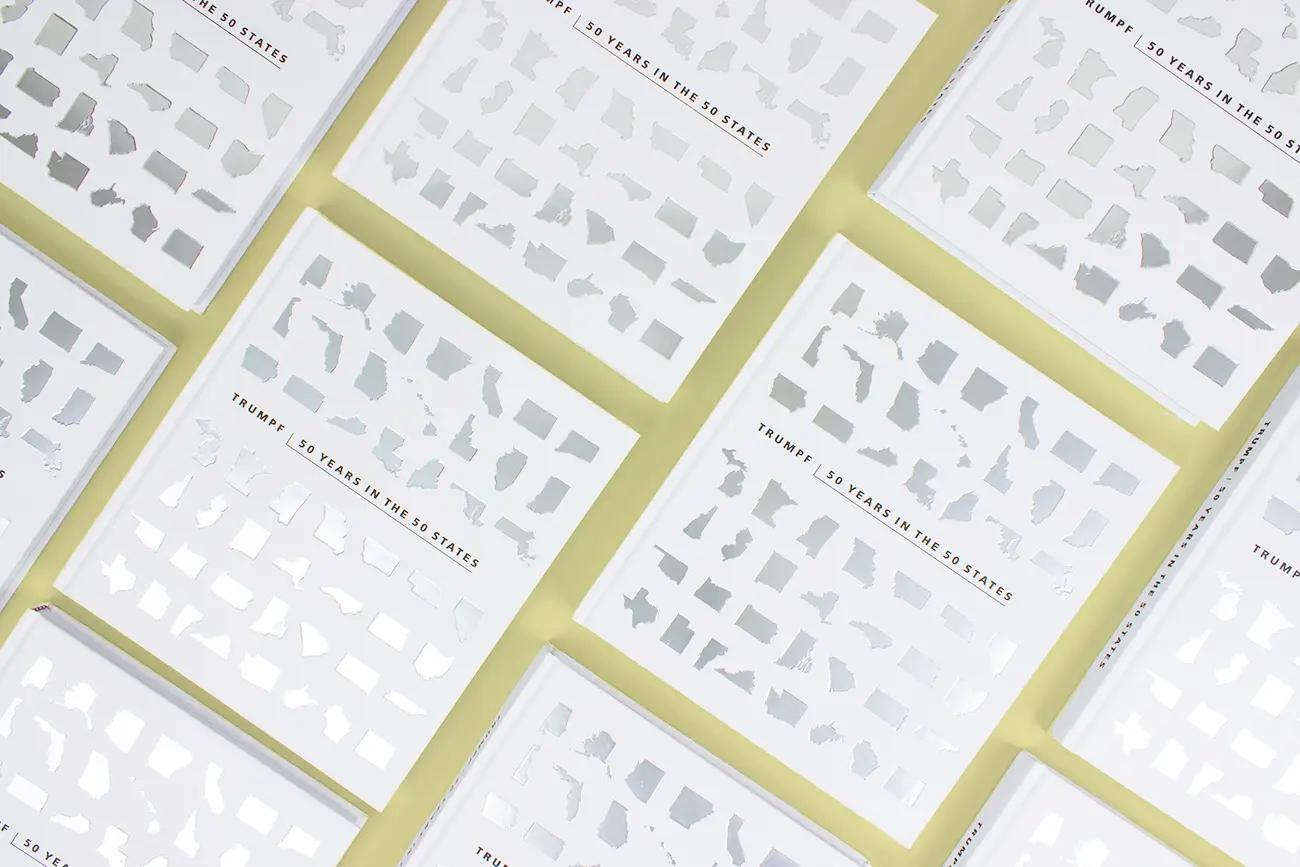
The anniversary logo emerged through subtraction. By laser-cutting typographic counters and reassembling the negative forms, the mark echoed the company’s fabrication processes. This logic became the governing principle for the broader system.
The result was a self-generating identity: the mechanics that shaped the mark informed the invitation, editorial structure, environmental graphics, and spatial experience.

While its common to just stick “50” on a logo to celebrate an anniversary, we wanted to create something unique to the TRUMPF brand, something ownable and part of their DNA
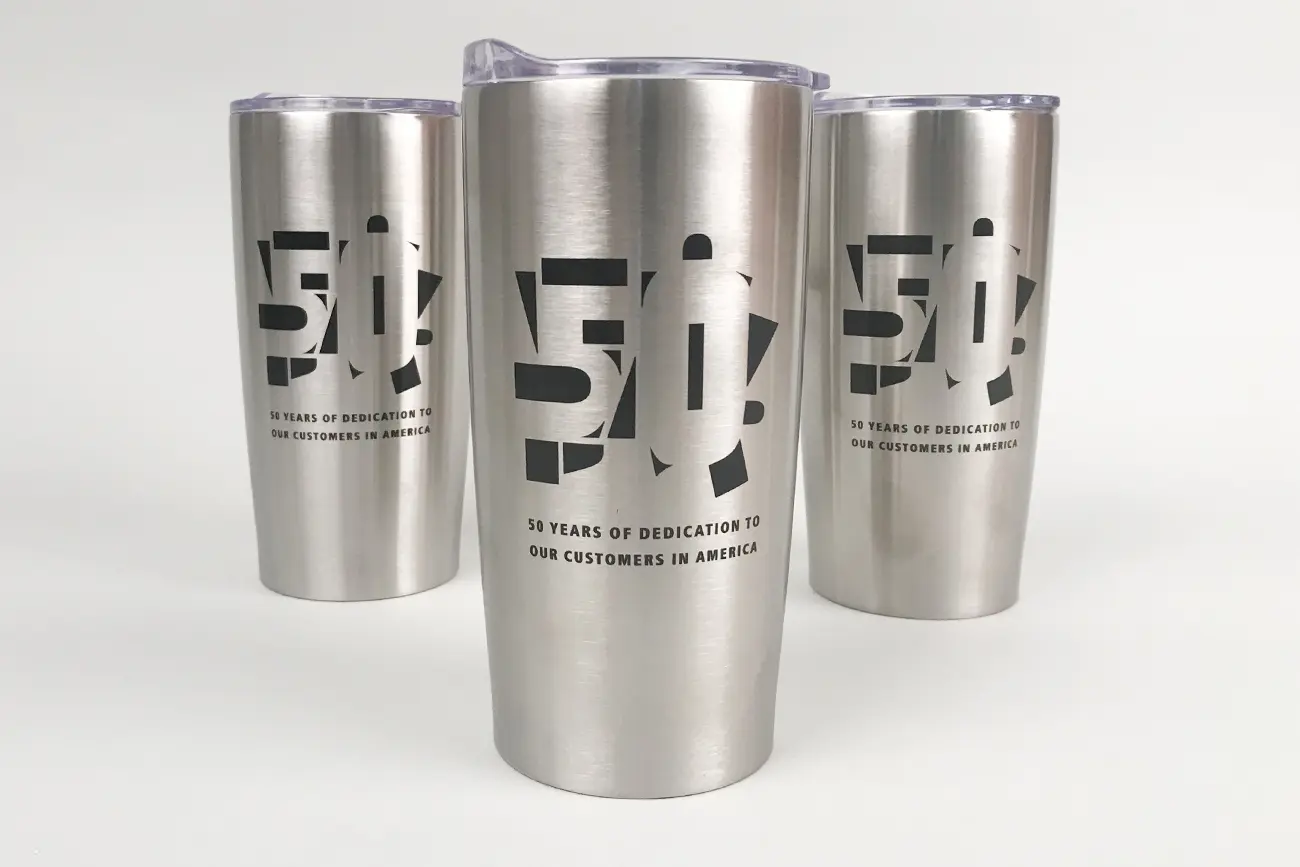
The negative pieces gave a distinctive celebratory feel.


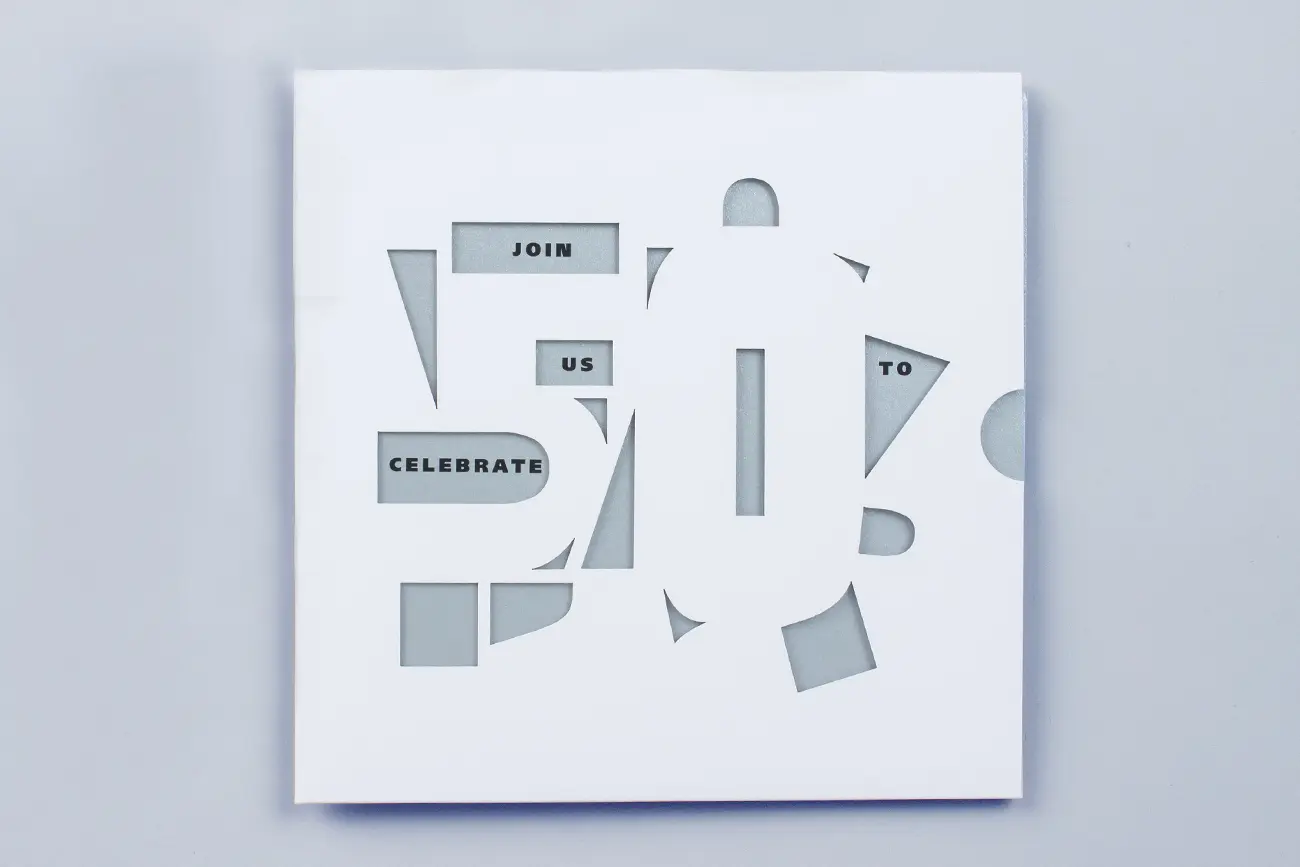
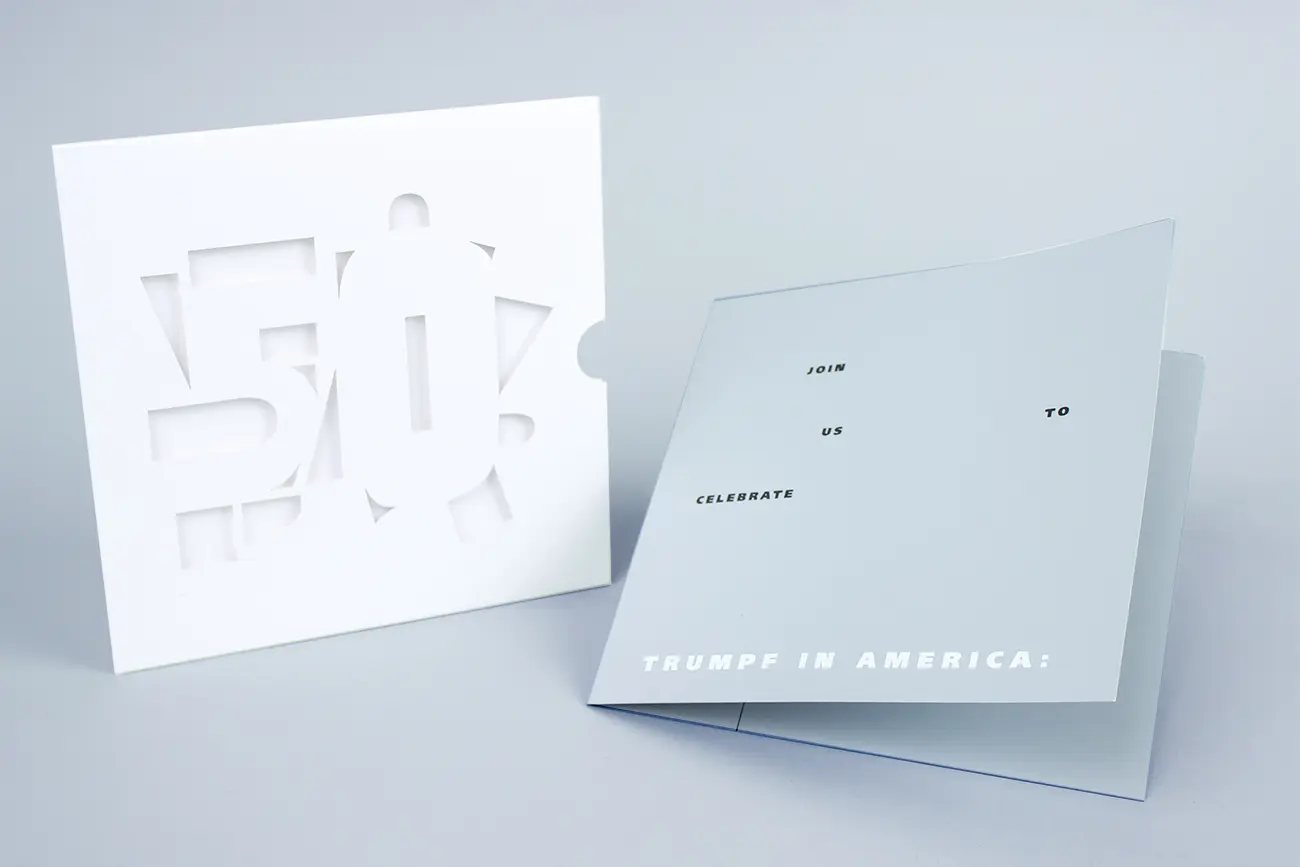

From Mark to Environment
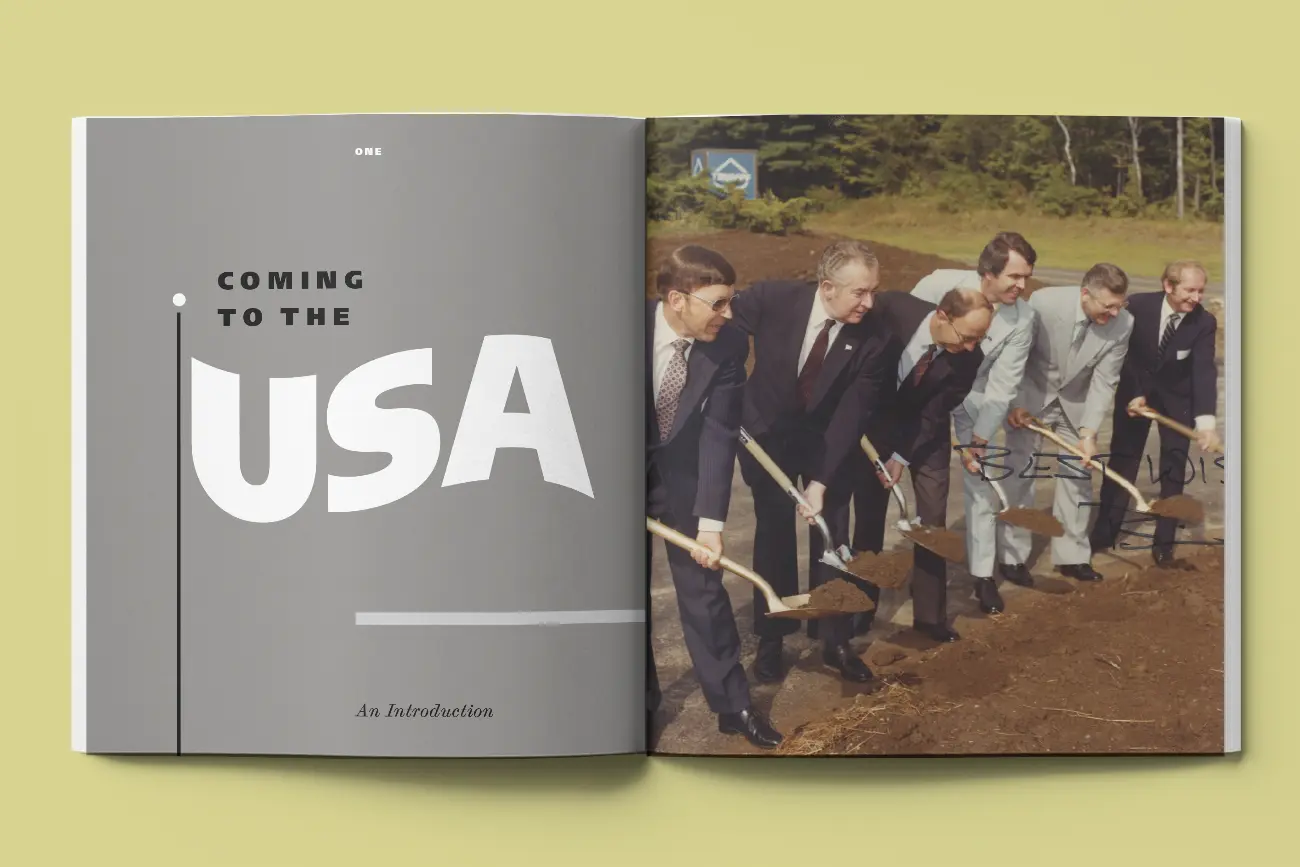
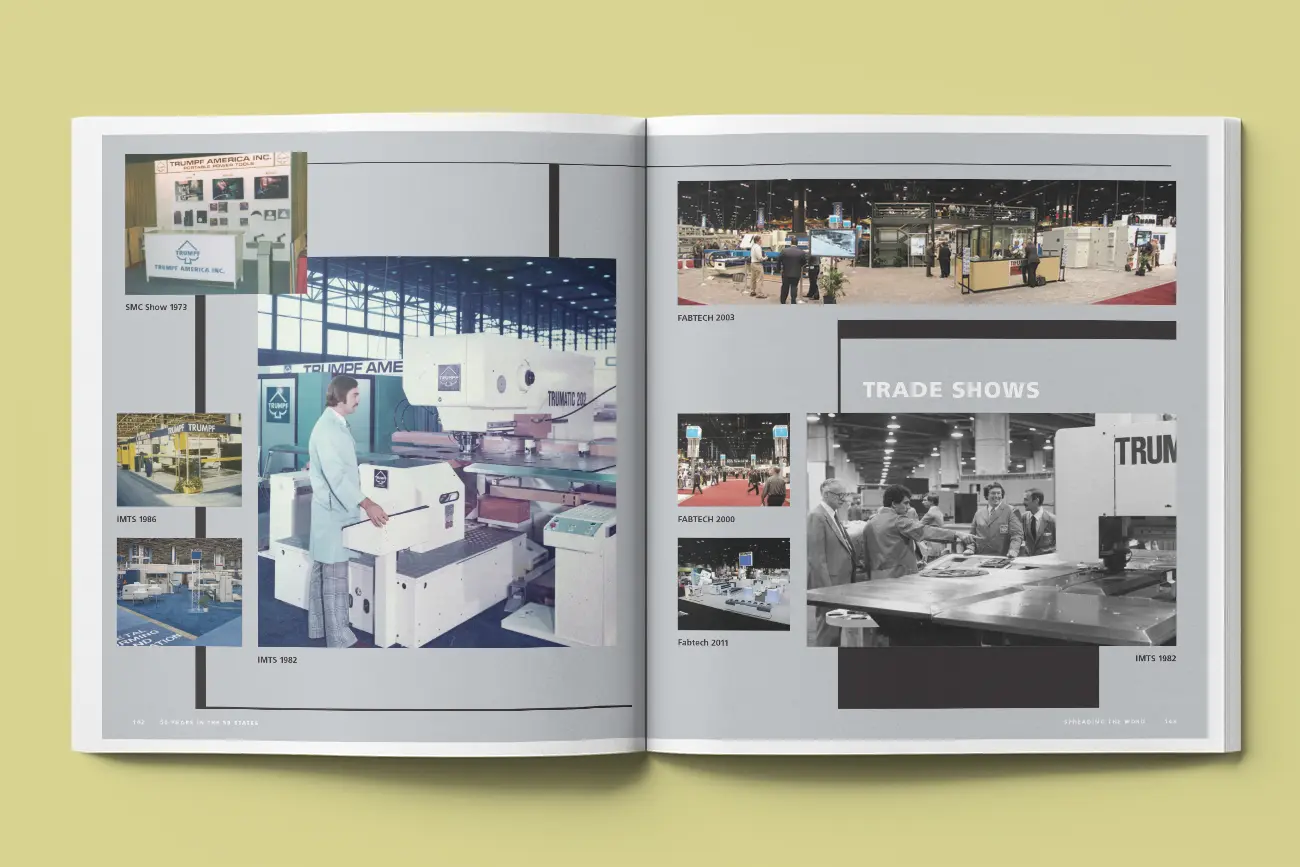
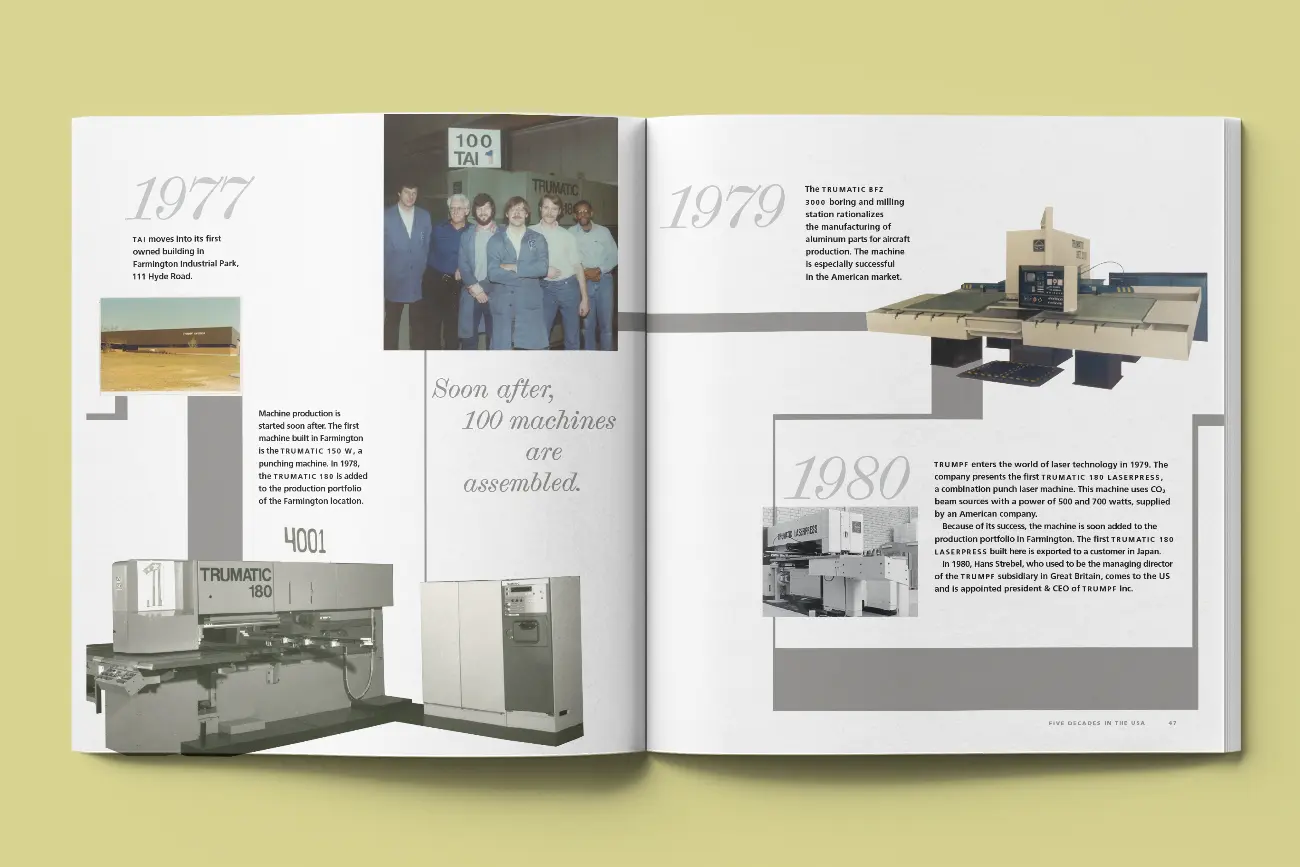
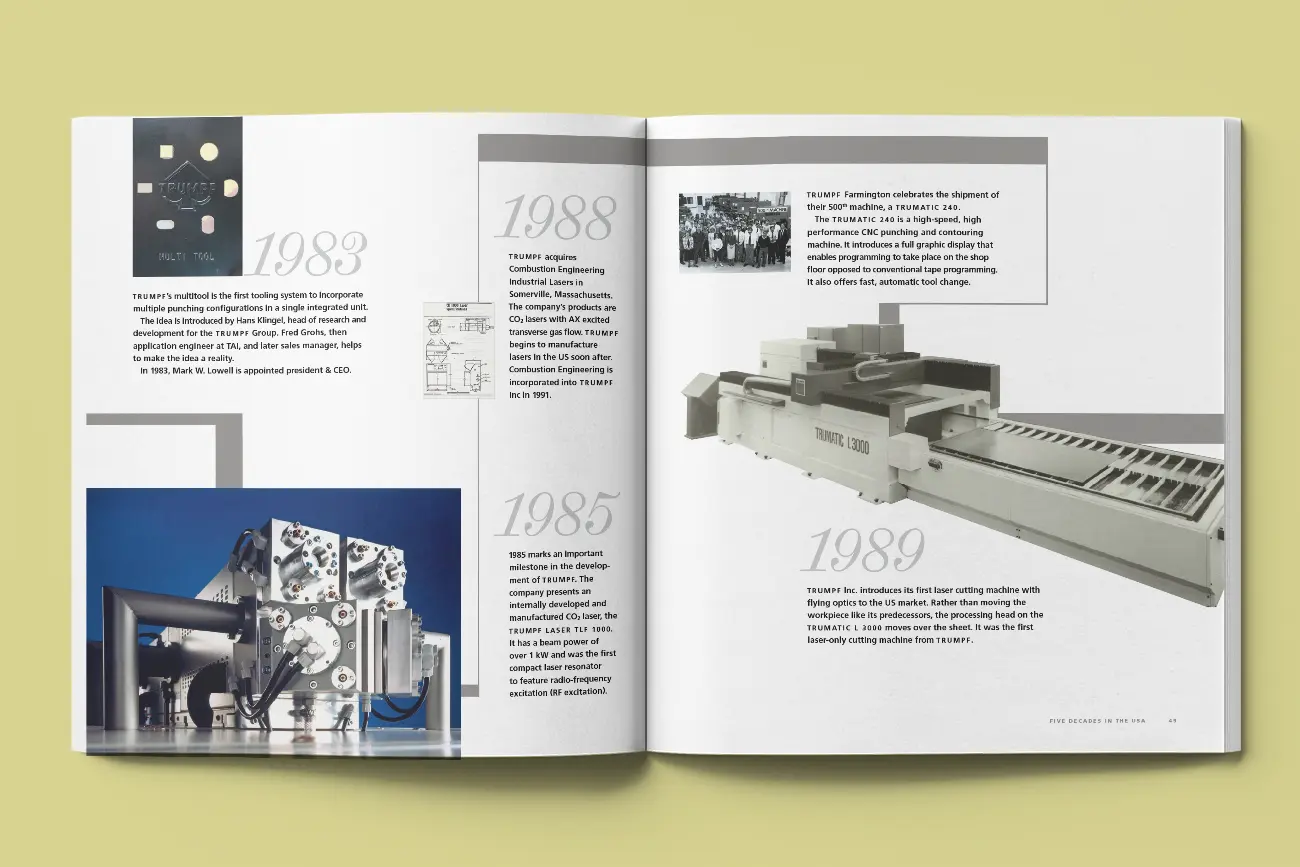
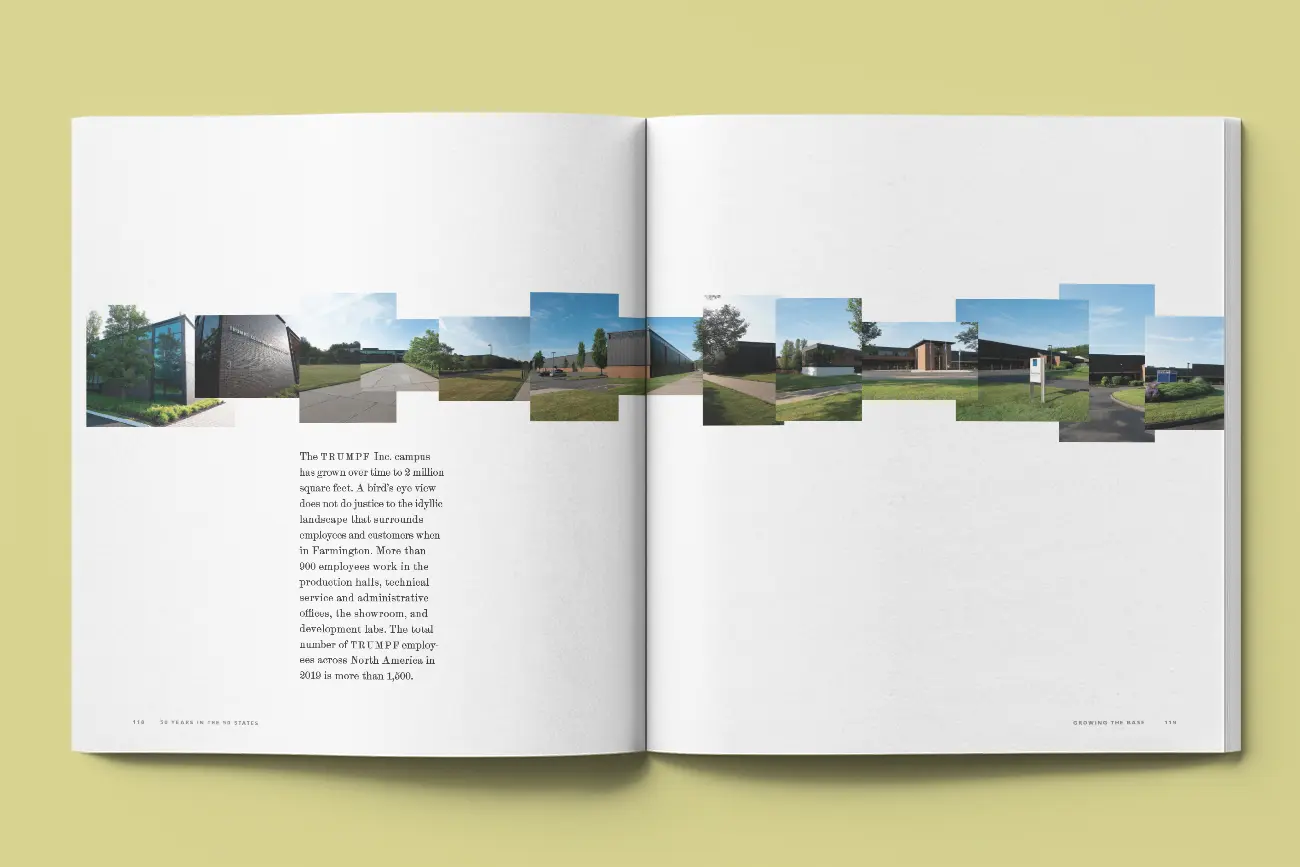
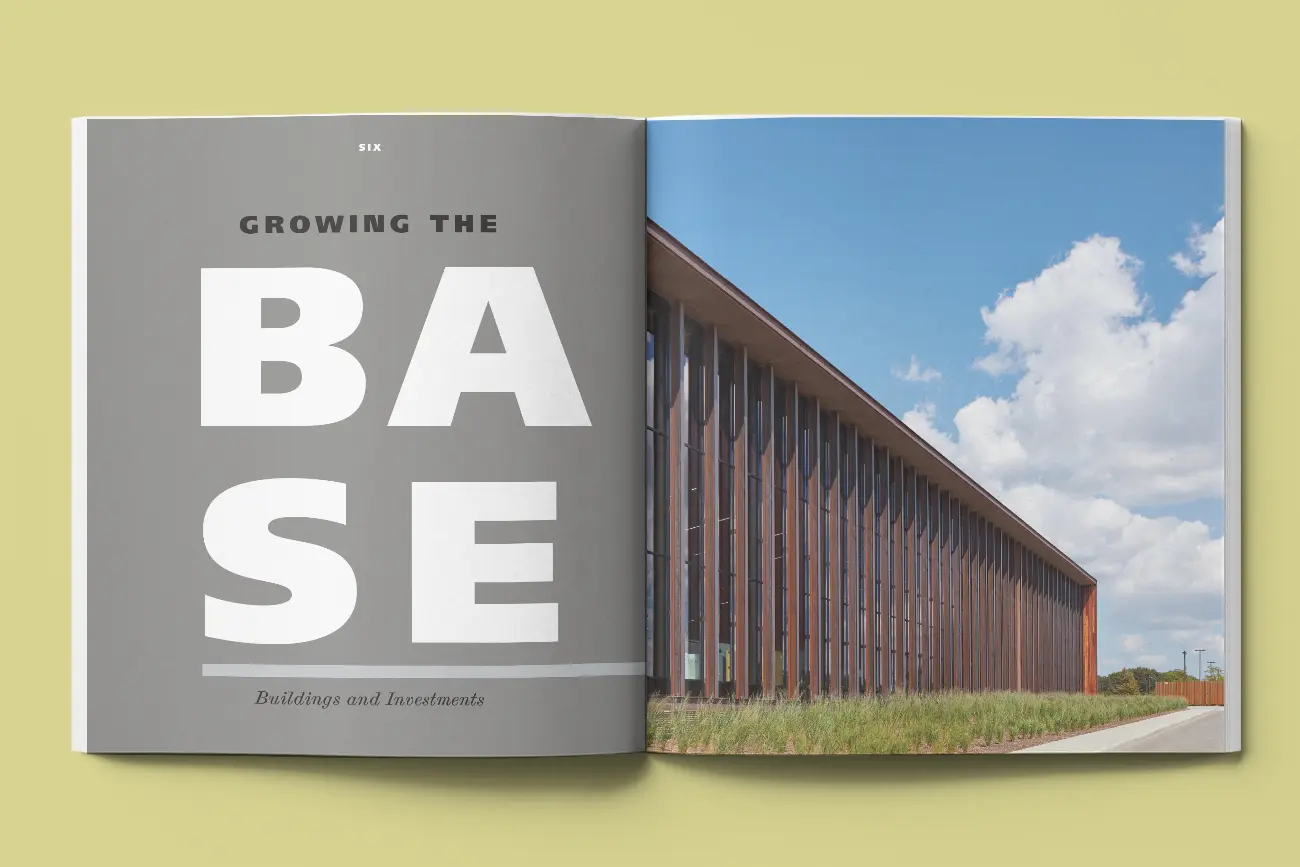
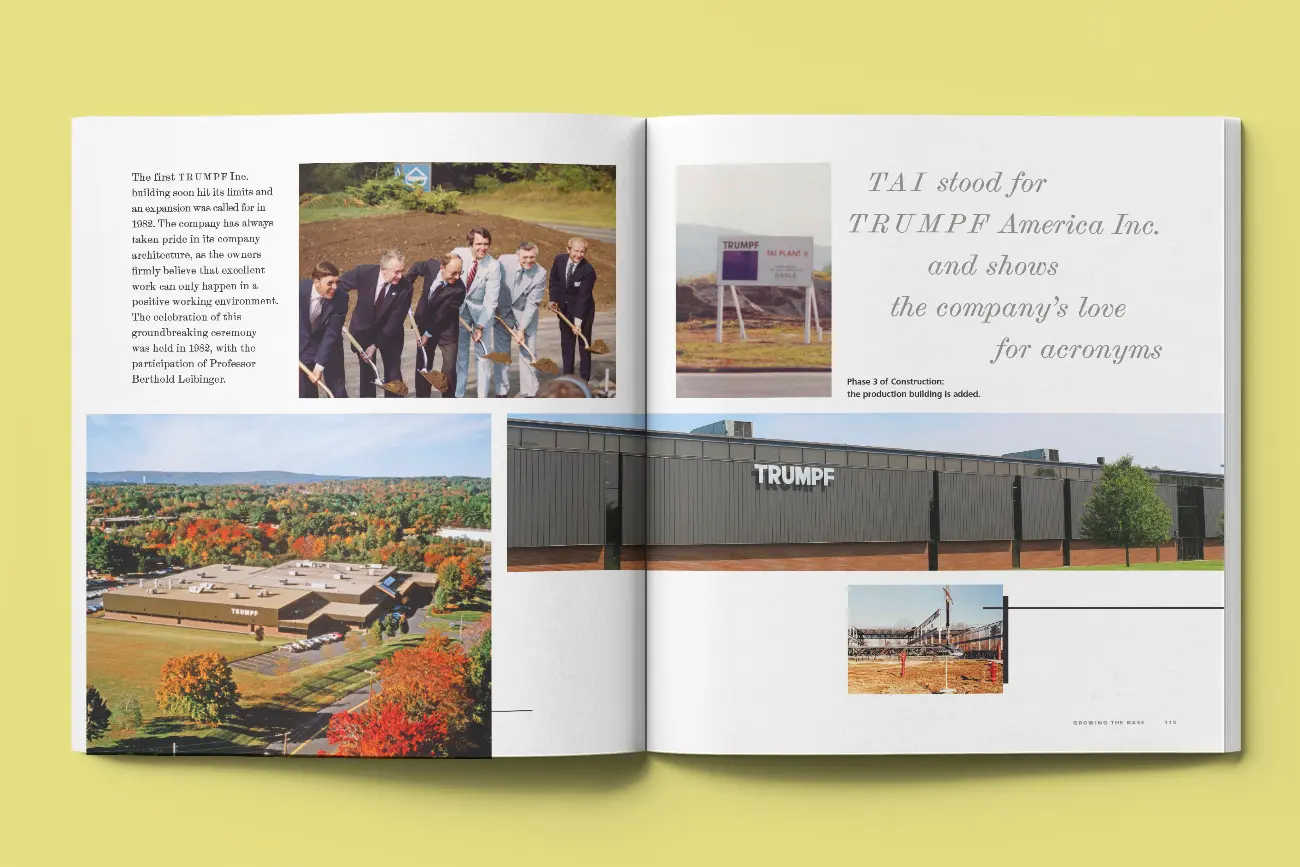
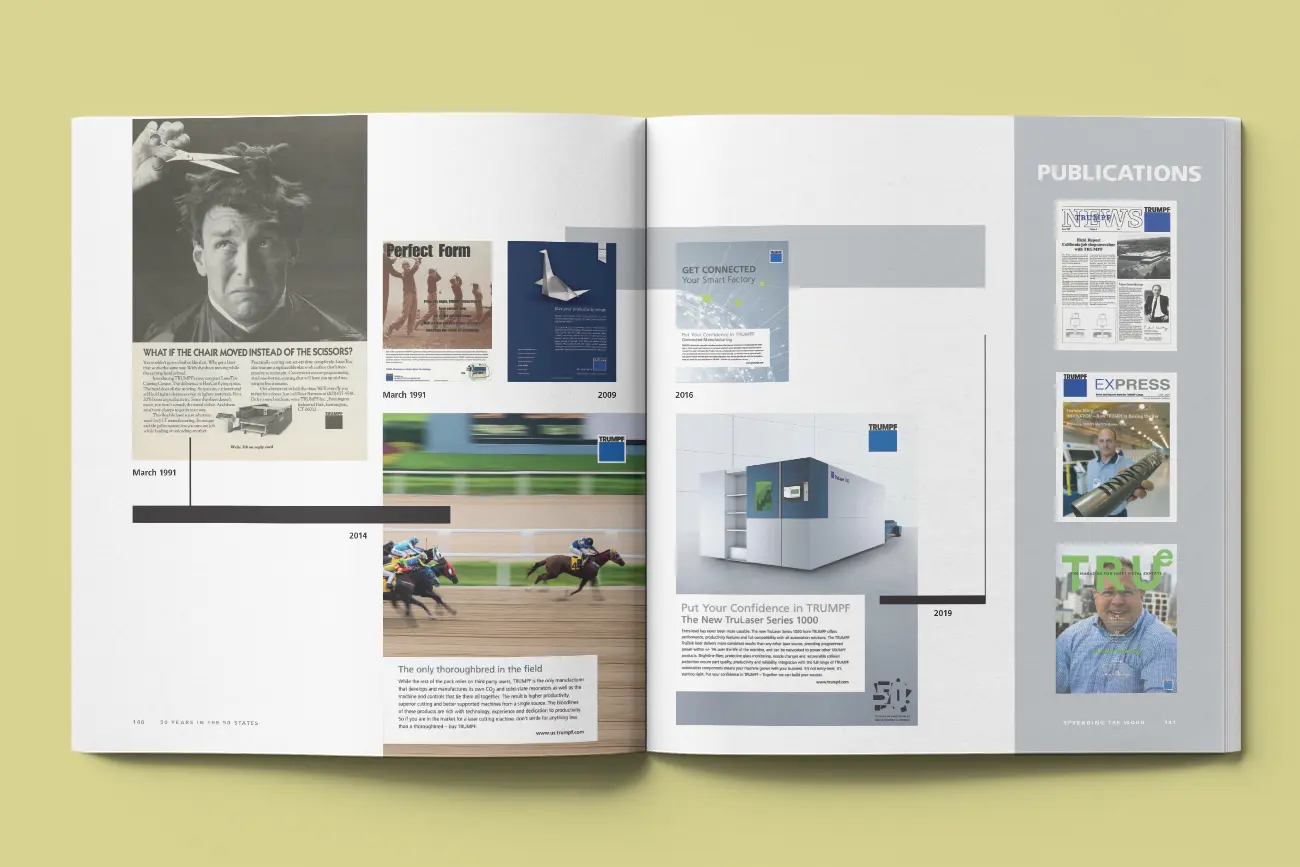
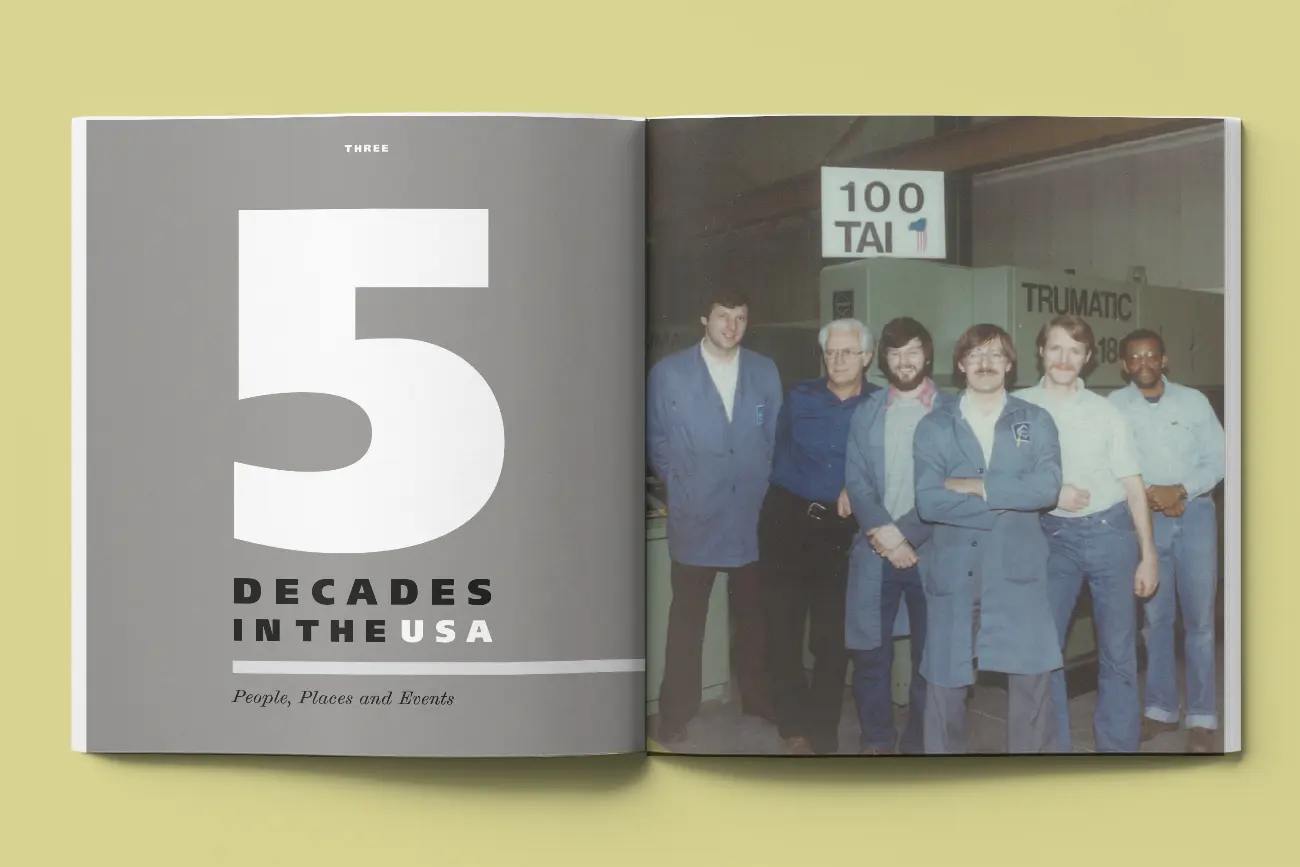
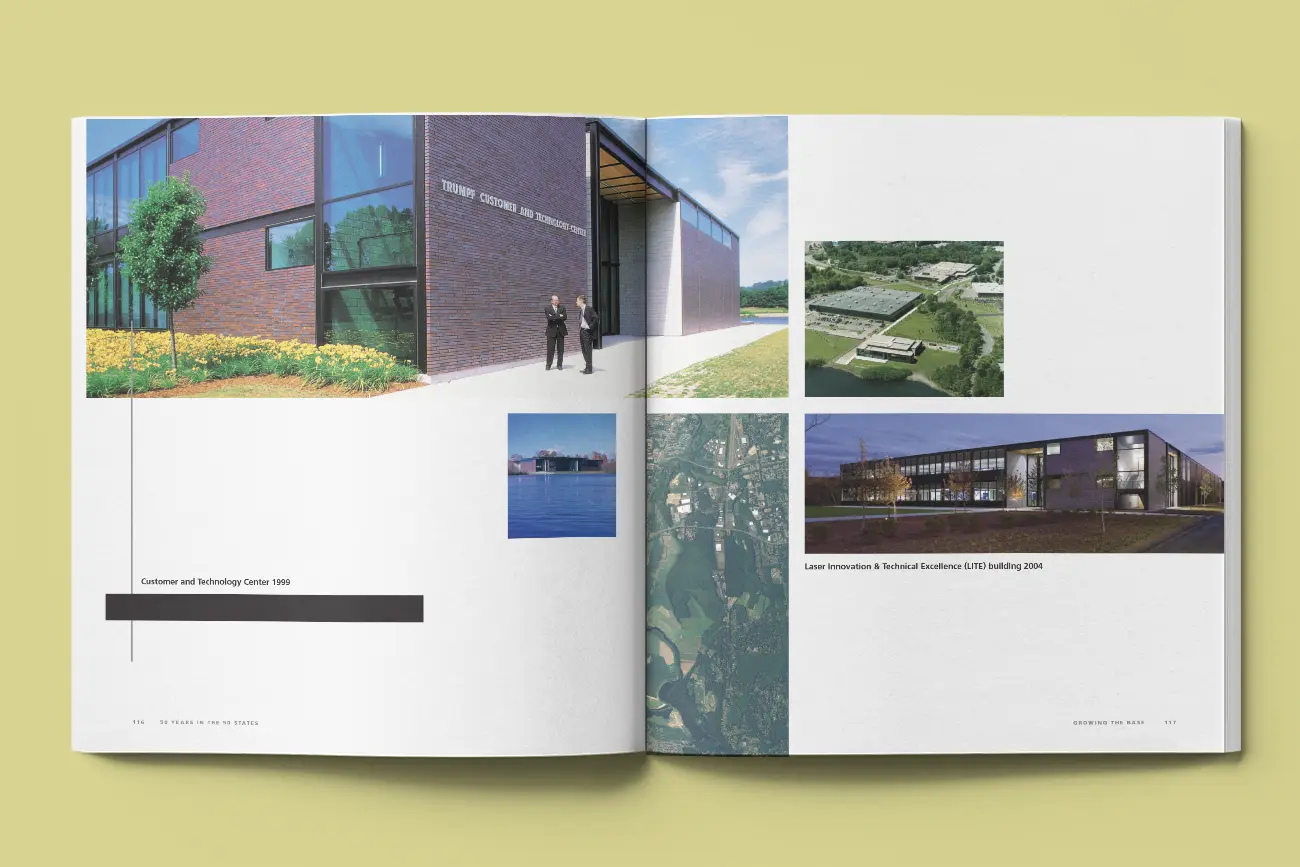
The laser-cut reveal of the invitation extended the theme of fabrication and material transformation. The anniversary book adopted a modular, Bauhaus-informed grid that balanced precision with flexibility, allowing multiple designers to contribute without diluting the system.
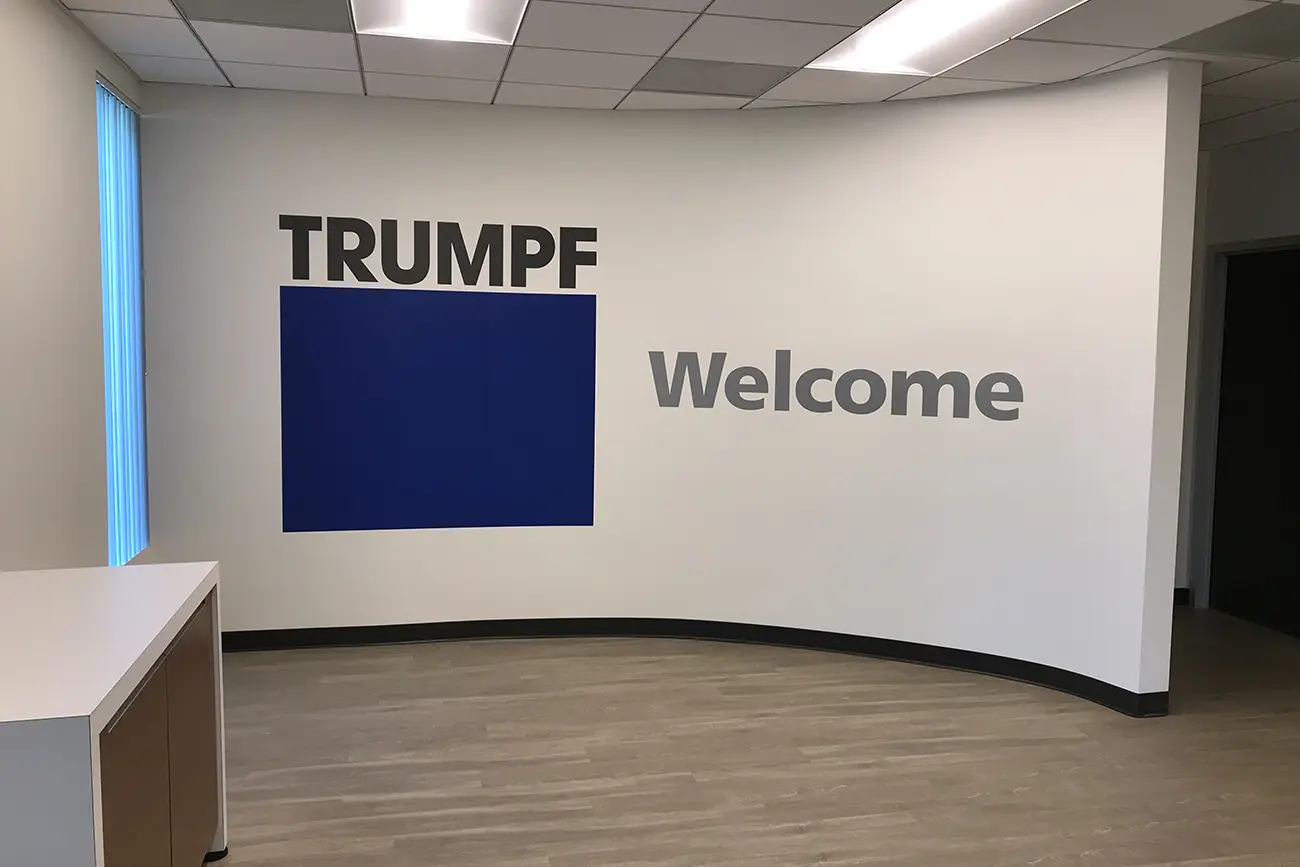
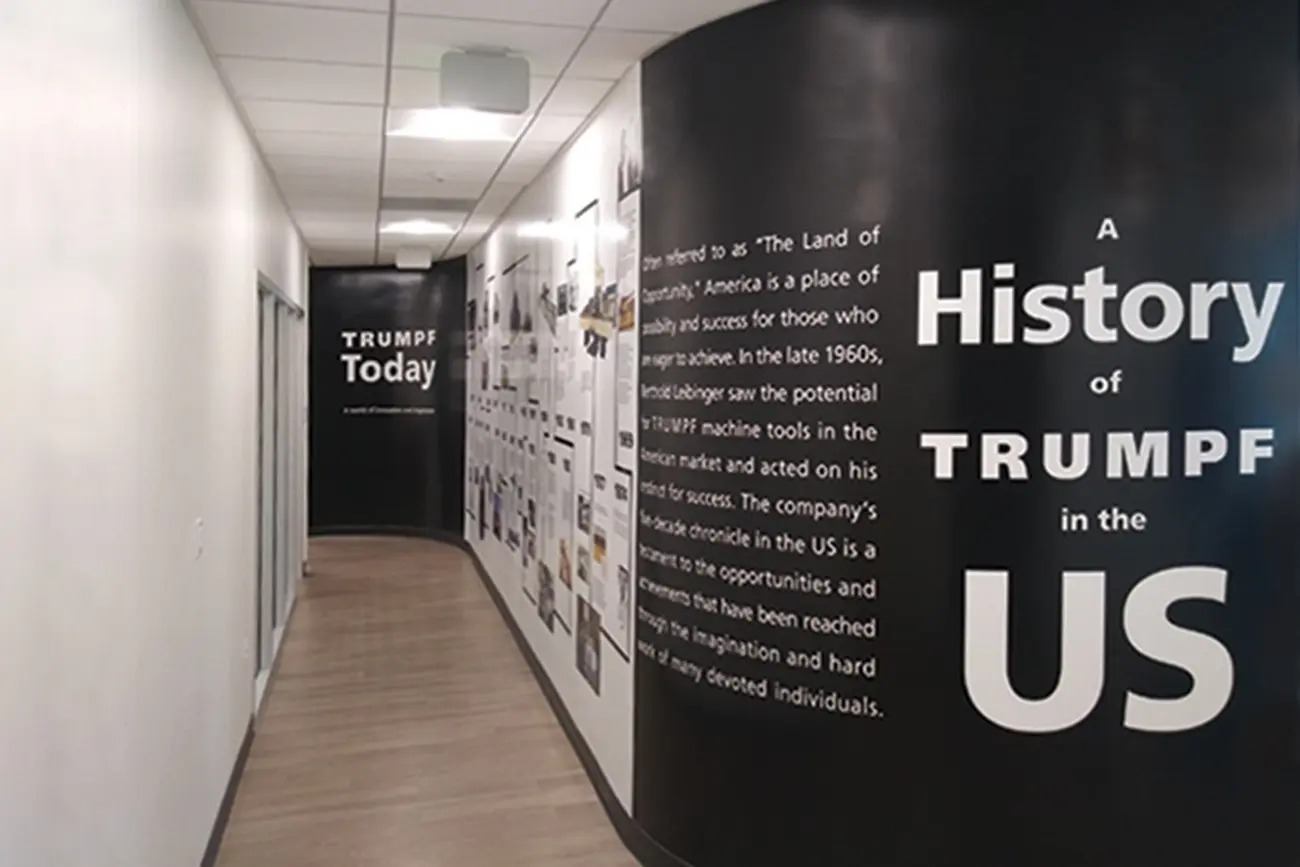
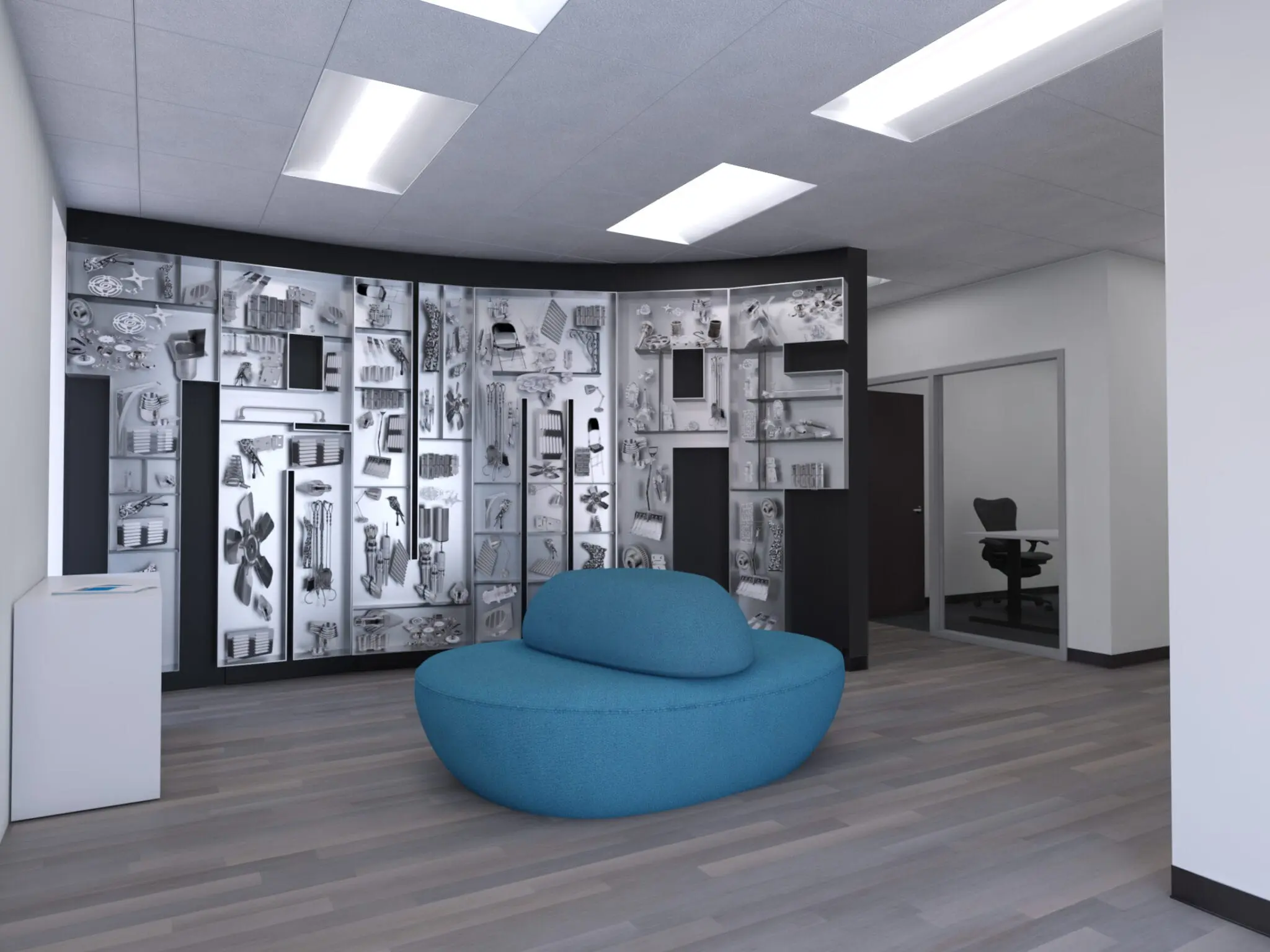
A timeline designed for the book was later scaled and translated into architectural installation, guiding visitors through TRUMPF’s new showroom and training facility. Rather than reinventing visual language for each touchpoint, the system expanded organically.
Governance & Scale
As the scope grew, I defined structural guardrails—grid systems, typographic checklists, and layout principles—to ensure integrity across contributors and mediums. This allowed the identity to function beyond direct authorship and reduced creative redundancy as applications multiplied.


Material Integrity & Sustainability
Material choices reinforced conceptual alignment. Metallic papers echoed fabrication without literal sheet metal mimicry. A locally sourced live-edge timber table introduced a sustainability thread, tying brand experience to place and responsible sourcing.


Reflection
Looking back, this project solidified my interest in building creative ecosystems that scale responsibly. By grounding identity in operational truth, the system sustained cohesion across mediums, teams, and constraints—demonstrating how brand can emerge from process rather than ornament.