Alexander Isley Website
A behind-the-scenes transformation to reflect a legacy in the light it deserves.
A Legacy, Redesigned for the Digital Age
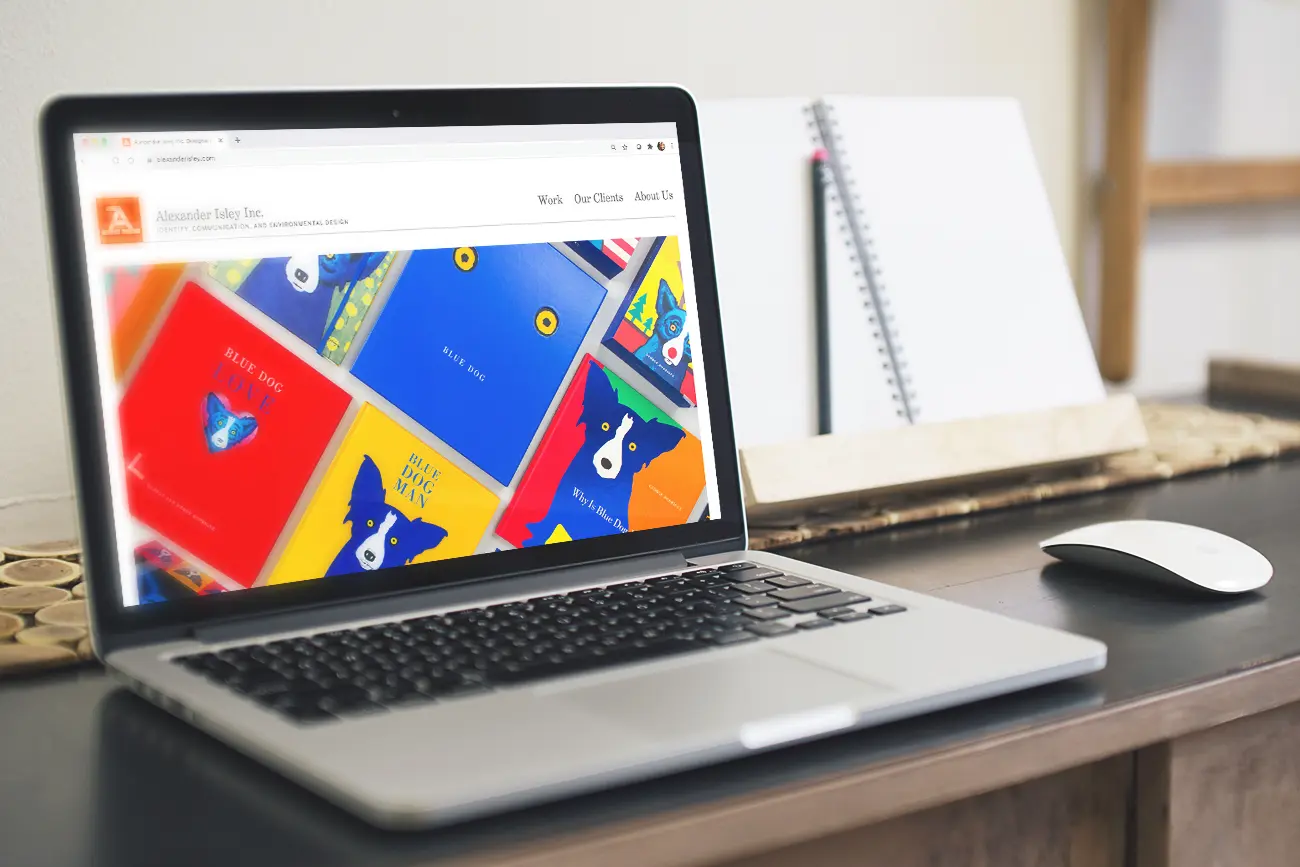
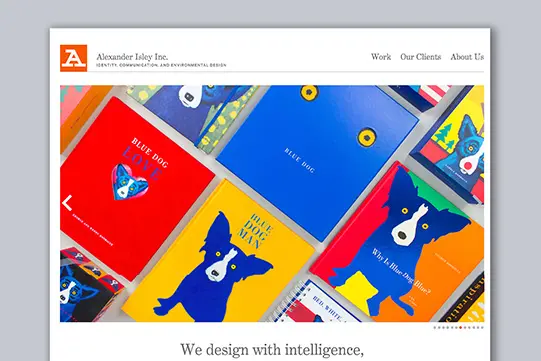
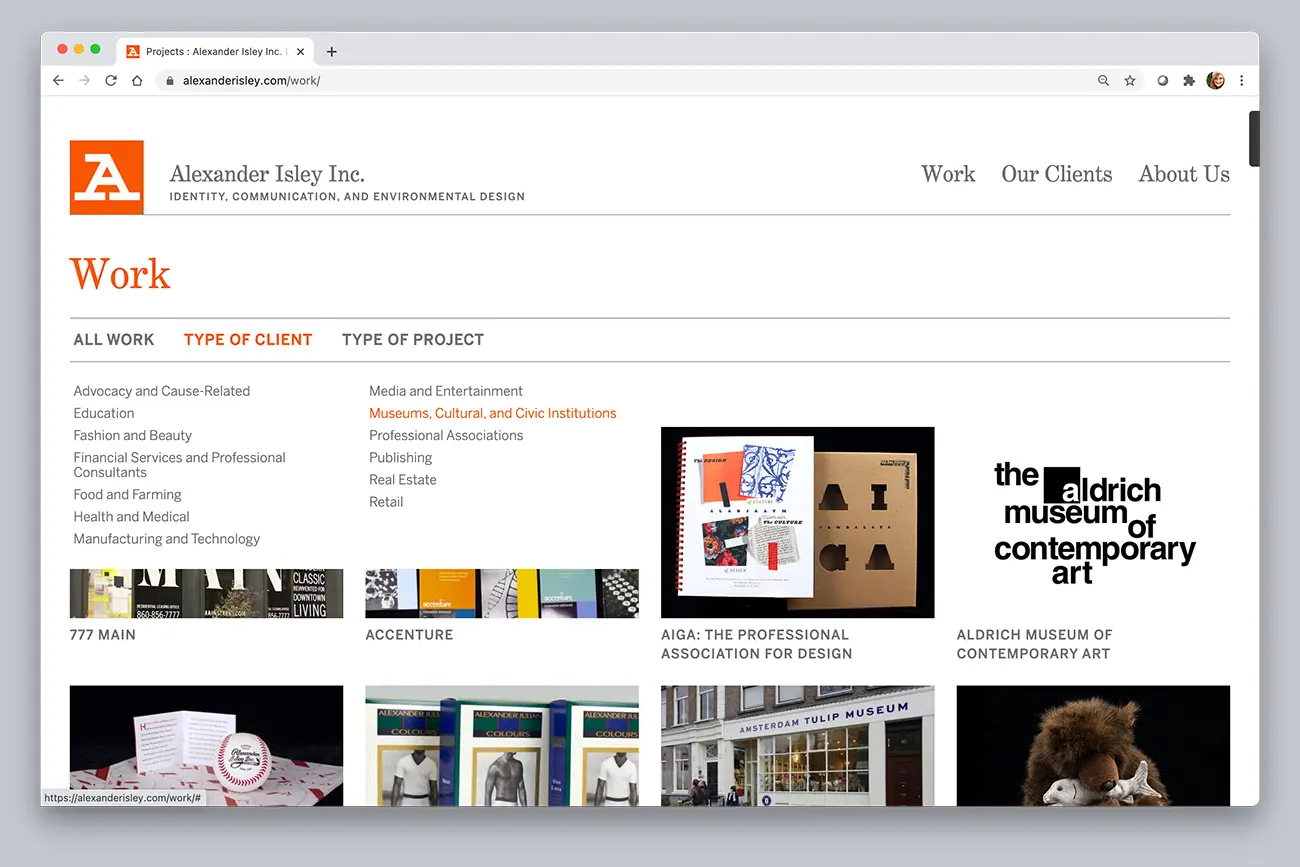
Alexander Isley is one of the most respected names in the design community—yet his studio’s website didn’t reflect the depth or vitality of its portfolio. It was hard to navigate, challenging to update, and offered small image sizes with little room for storytelling. During a lull in client work, I took it upon myself to redesign the site from the ground up, aiming to build a flexible, long-lasting digital platform worthy of Alex’s reputation.
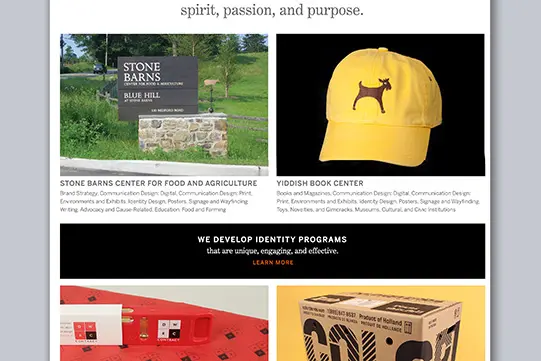
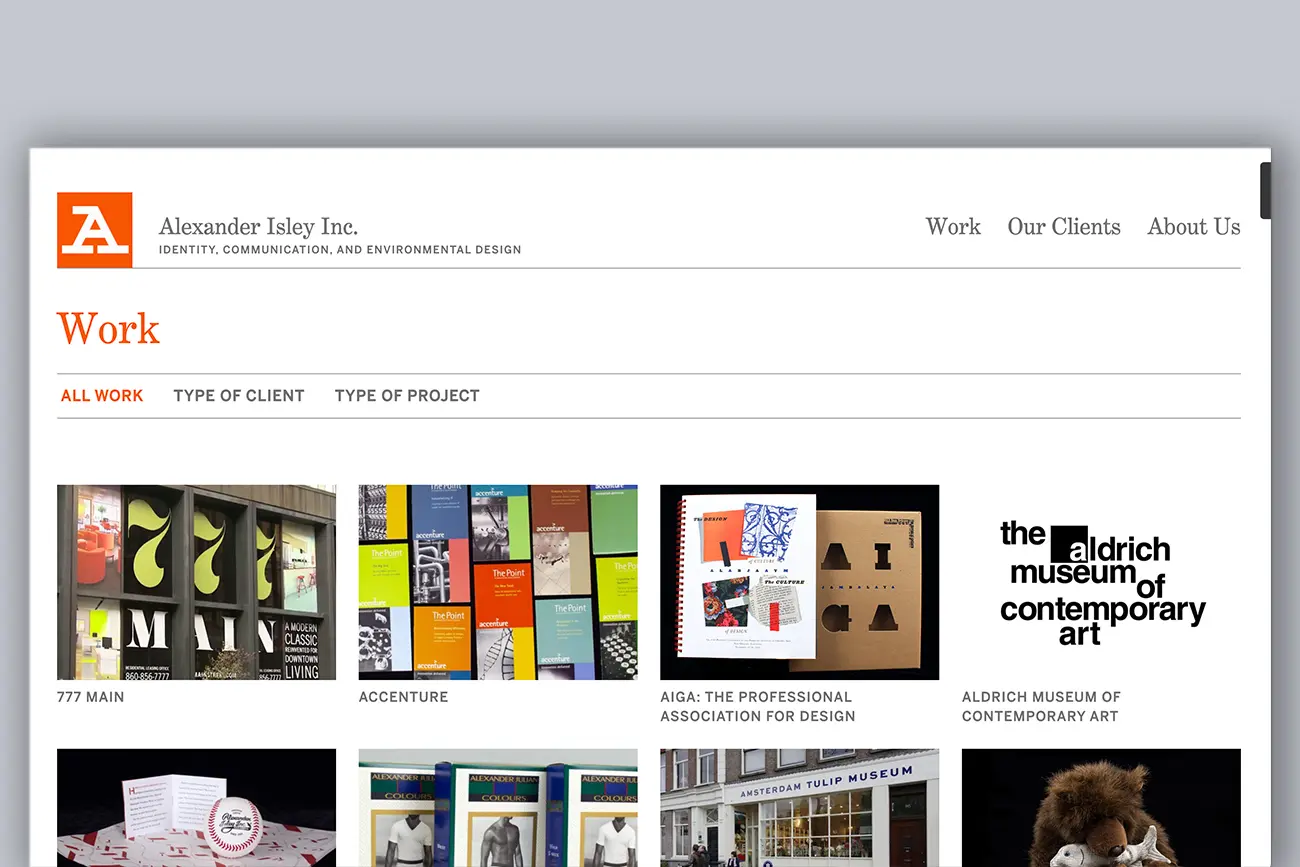
The redesign began with a revised sitemap and UX strategy, built around the question: How do I get to what matters most, in the shortest number of clicks? I wanted users—whether prospective clients or curious peers—to quickly find the work that resonated with their sector or interest area. I introduced tagging and filtering by industry and solution, to make the archive feel accessible and intuitive.
While designing the front-end, I also outlined the structure for the CMS, prioritizing backend usability. The entire system hinged on a single source of truth: the project page. This meant once content was added in one place, it could be surfaced throughout the site without duplication. I created a full guide and hosted a tutorial session to ensure the team could maintain and grow the site after my departure.
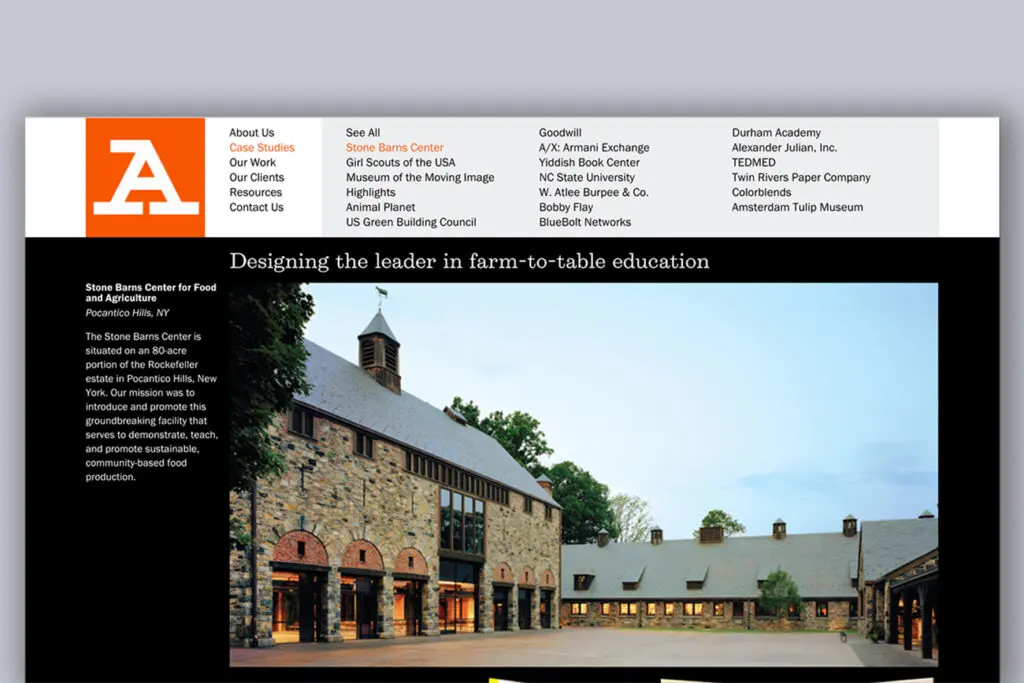
The previous site navigation was dark and featured small images. The navigation followed a four-column, horizontal grid.
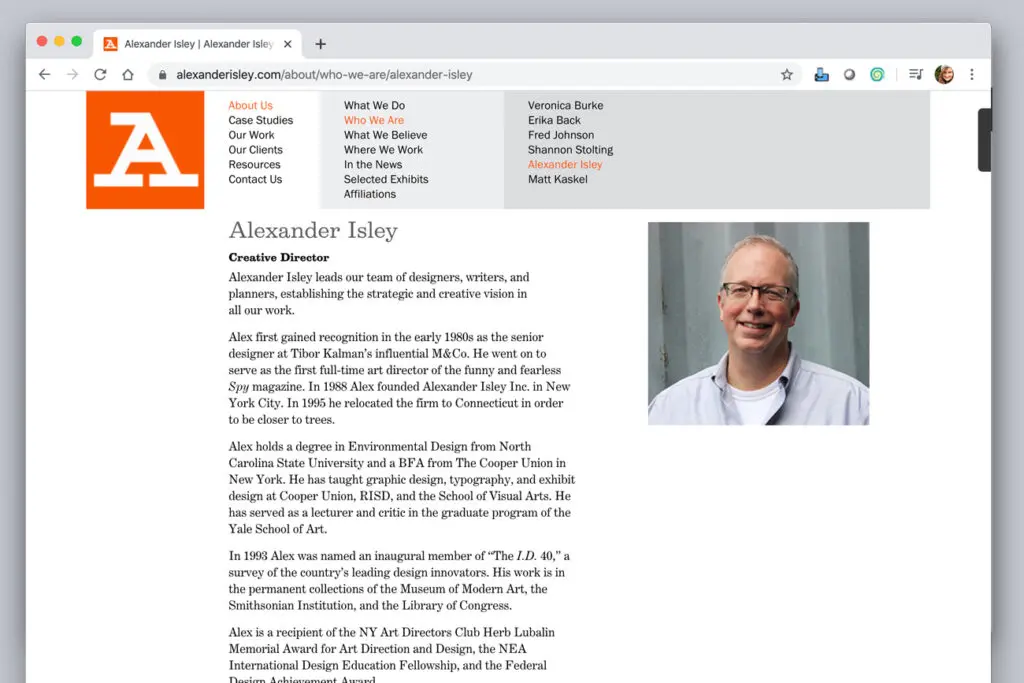
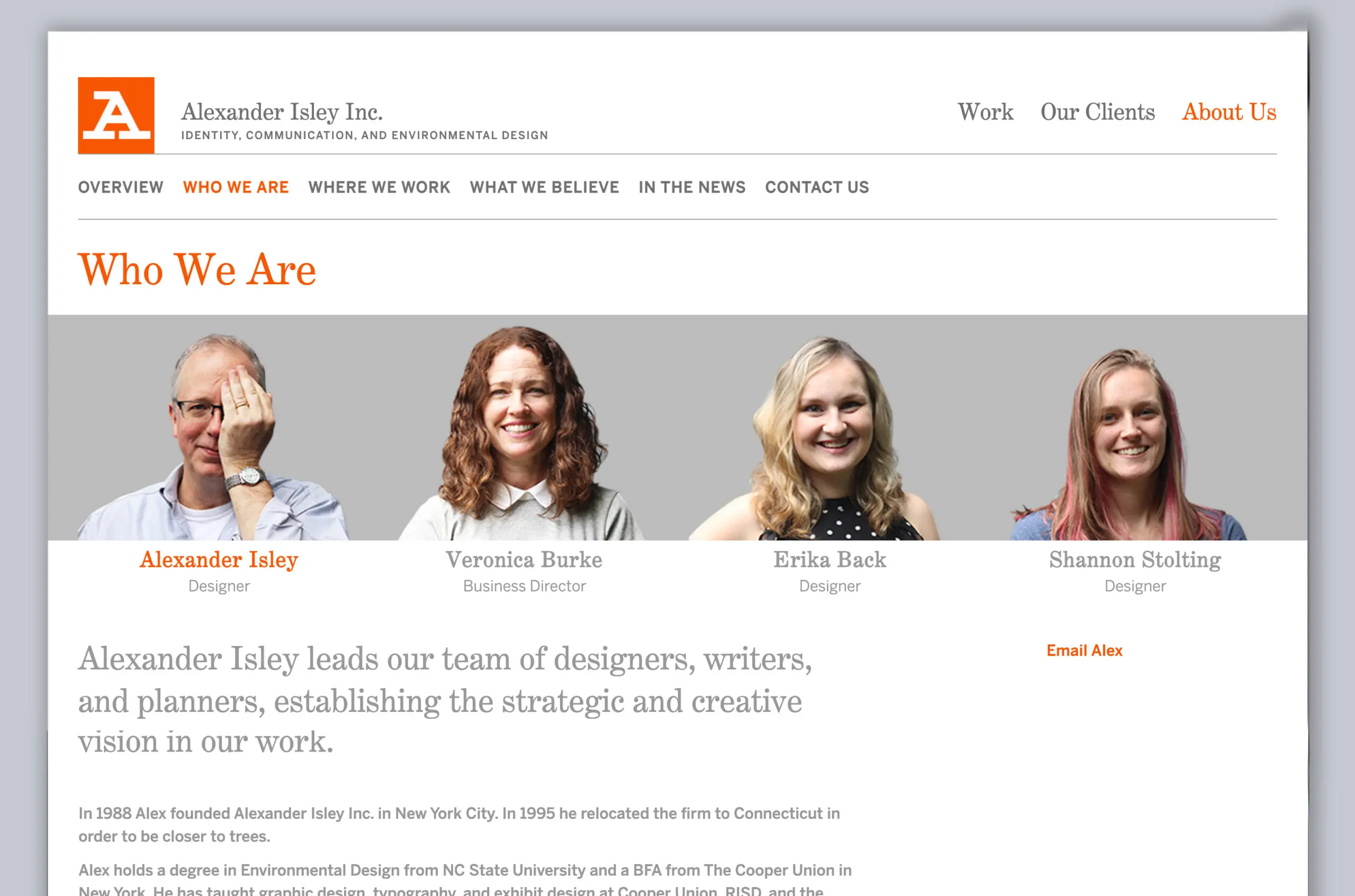
The old staff bio pages were long paragraphs that were difficult to access.

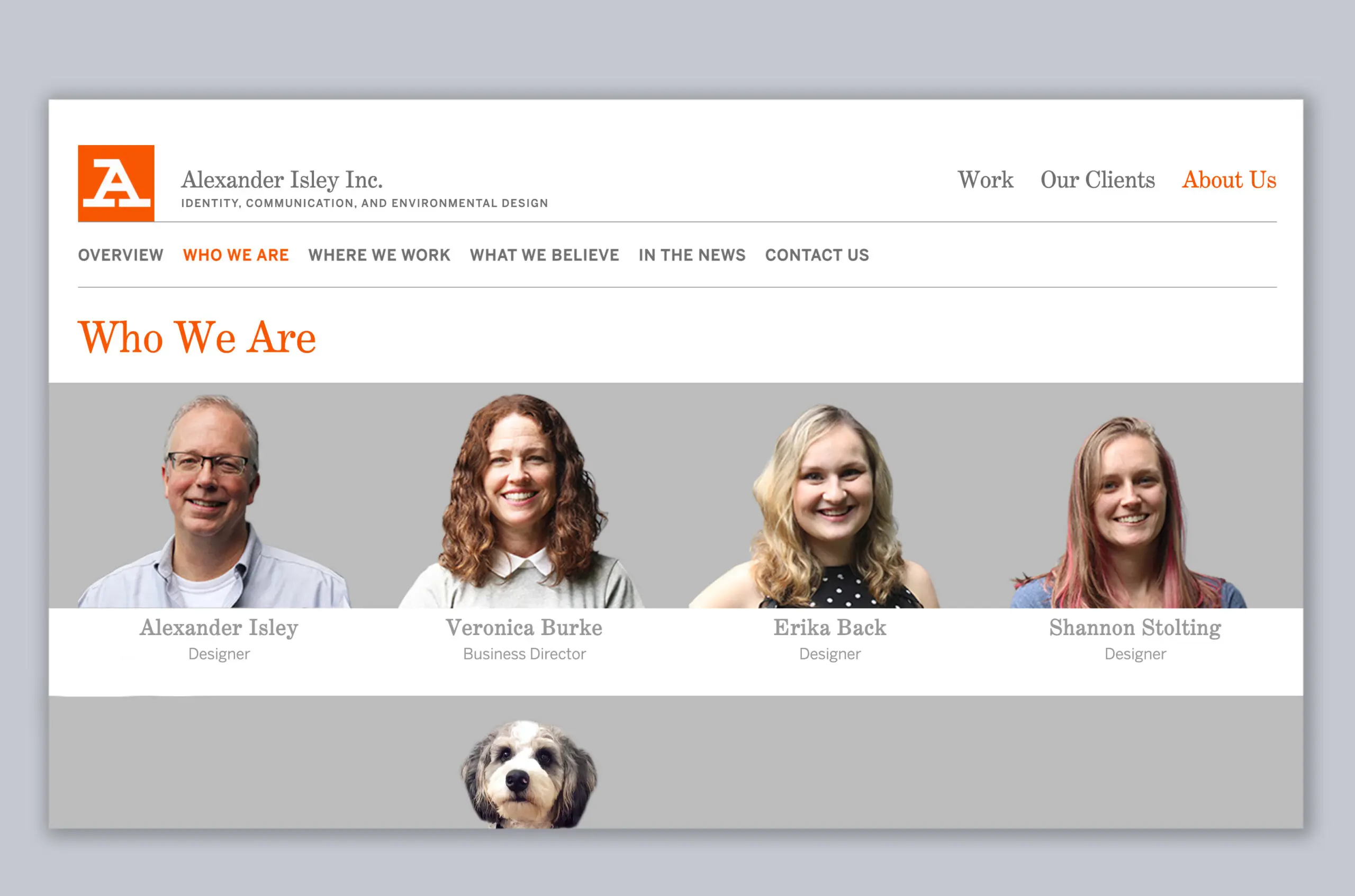
I sourced and managed developers, co-wrote case studies with Alex, rephotographed and color-corrected portfolio imagery, and photographed team headshots. I also implemented SEO-friendly file naming and link structures to help elevate search visibility. Our goal was to ensure the site would feel like a living archive—not a static brochure. Post-launch analytics showed a 1,857% increase in average daily users.
This project launched during the early months of COVID-19, a time when small studios like ours relied more than ever on digital reach. The new site allowed Alex to pivot seamlessly into remote conversations, pitch new work more dynamically, and update his portfolio in real time. Years later, I’m proud to see new projects continue to appear—proof of a sustainable design solution that still serves its purpose.
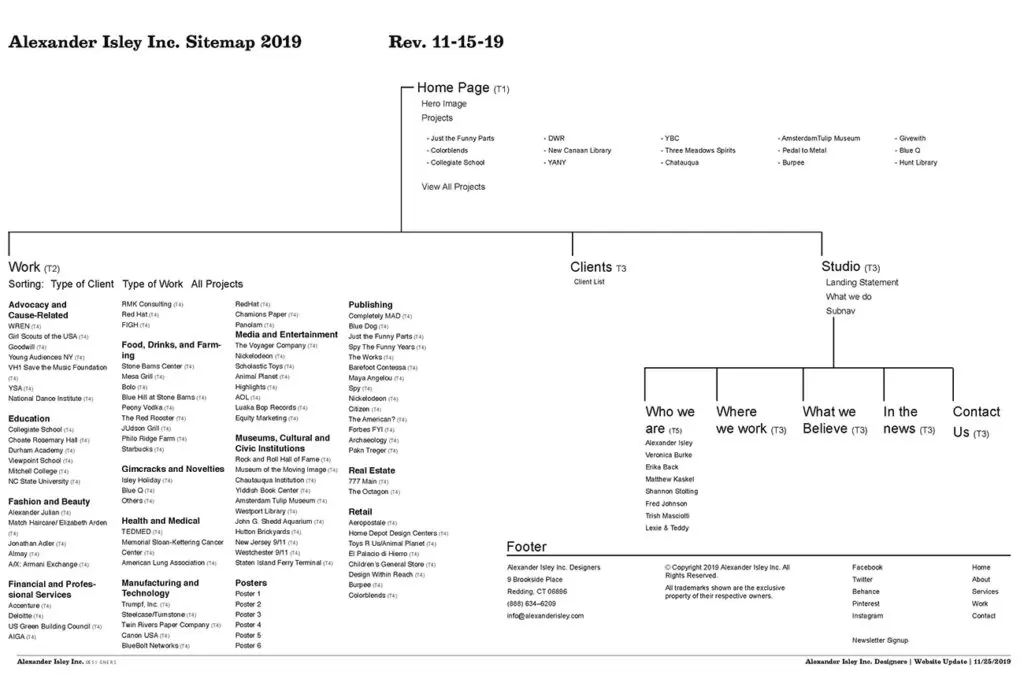
When design is clear, stories get heard.
This was a full-circle application of my values as a designer: design should be a tool for clarity, ease, and forward momentum. I saw a gap and created a system to close it—quietly, strategically, and with respect for both the client and the content.
It’s not my first website, nor my only one—but it’s one of the clearest examples of my ability to think in systems, solve invisible problems, and give great work the space it deserves.